People
The Hands Behind the Harvest
Japanese citrus is mostly grown by small family farms, often on steep and difficult ground. An introduction to the work that brings these fruits from tree to table.
Tangy. Tropical. Distinctive.
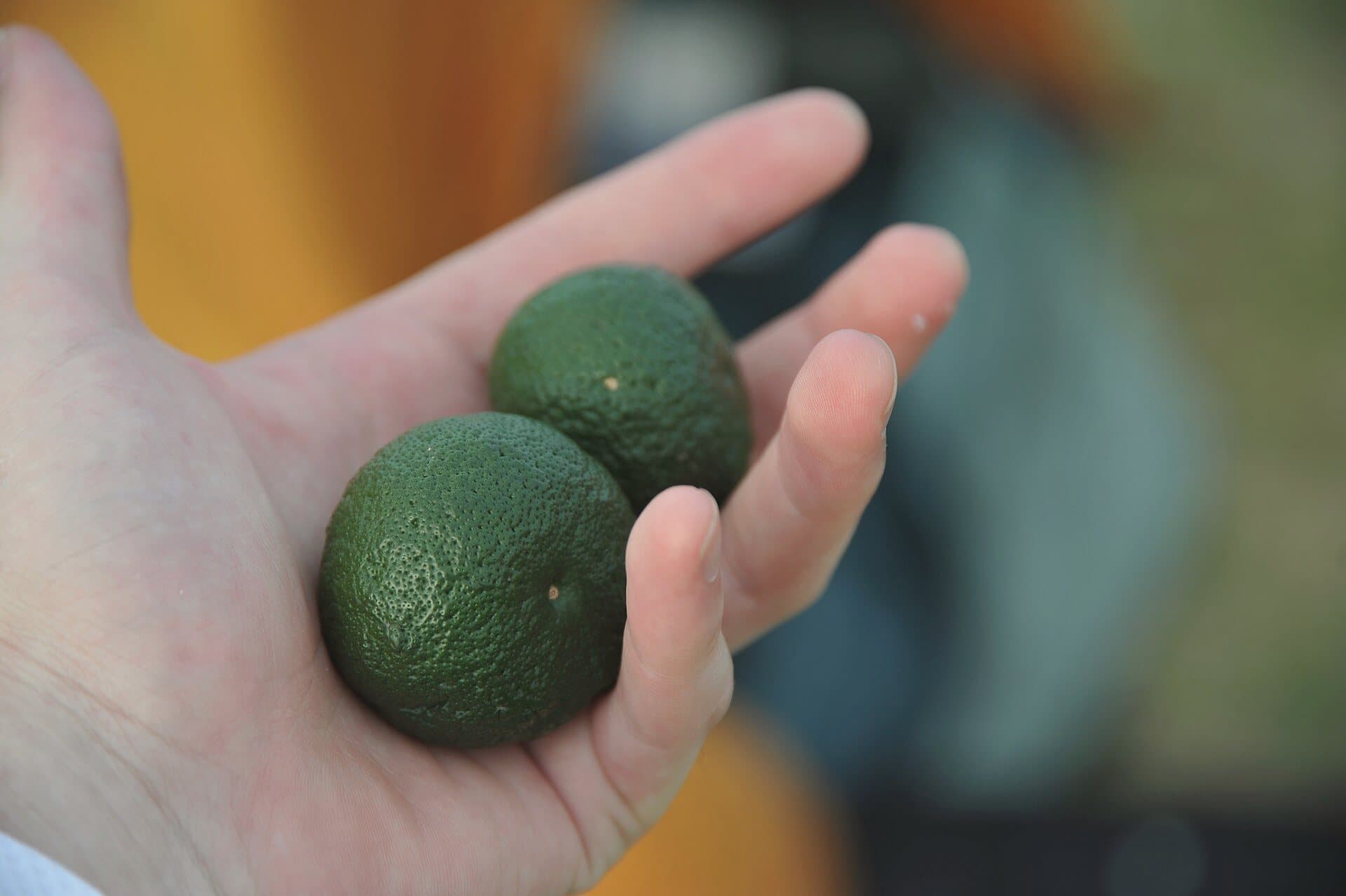
From the subtropical islands of Okinawa comes a tiny, flattened citrus with a big voice. Green, it is intensely tangy; ripened orange in winter, it turns sweet enough to eat.
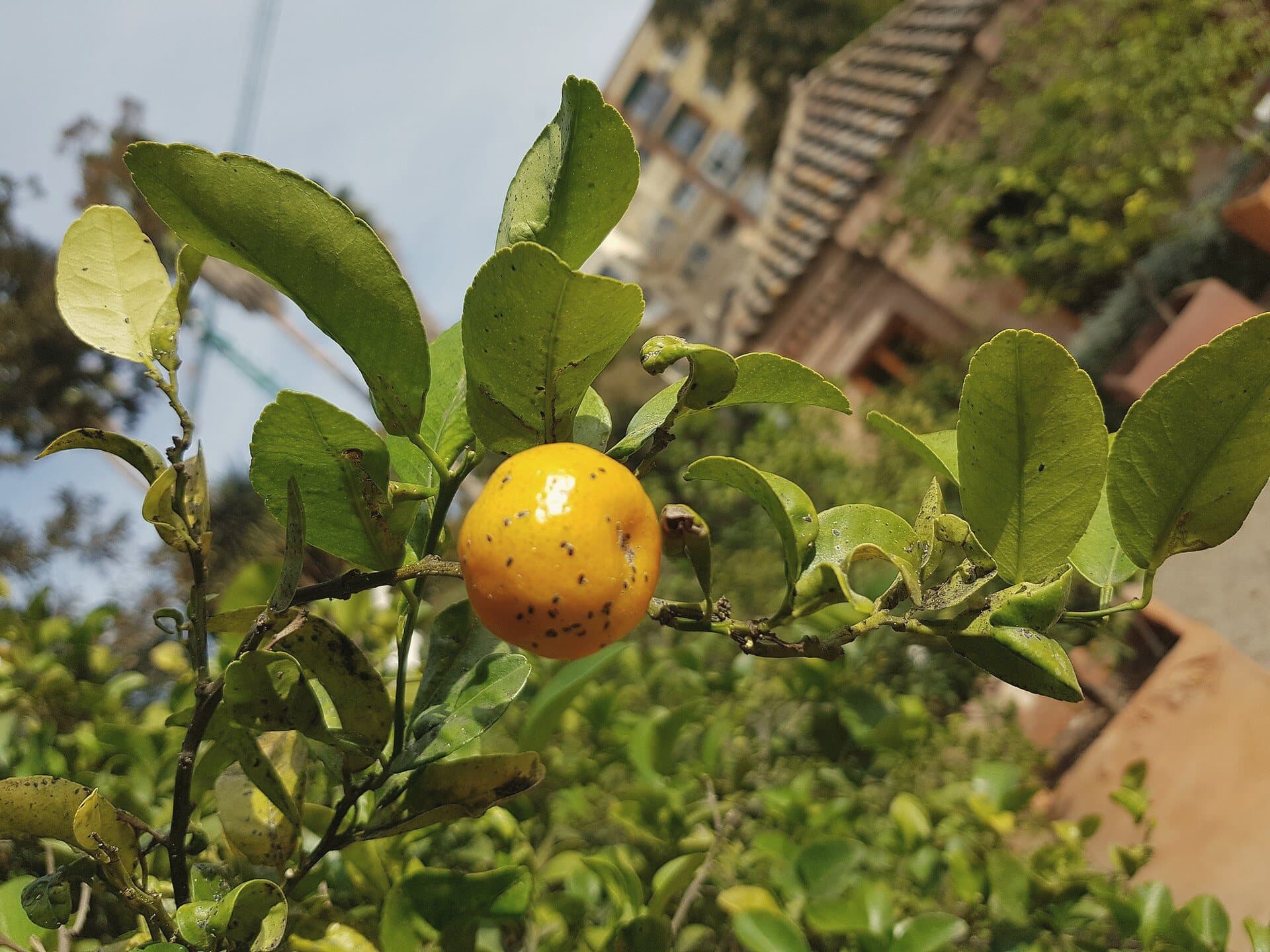
Photo: User:Zenwort · CC BY-SA 4.0
Flavor Profile
Sharply sour when green, with a tropical, almost mandarin-like fragrance and a noticeable bitter edge from the peel. Ripe fruit is sweeter and softer.
Editorial tasting profile on a five-step scale — a qualitative guide, not laboratory data. Flavor varies with ripeness, harvest time and growing conditions.
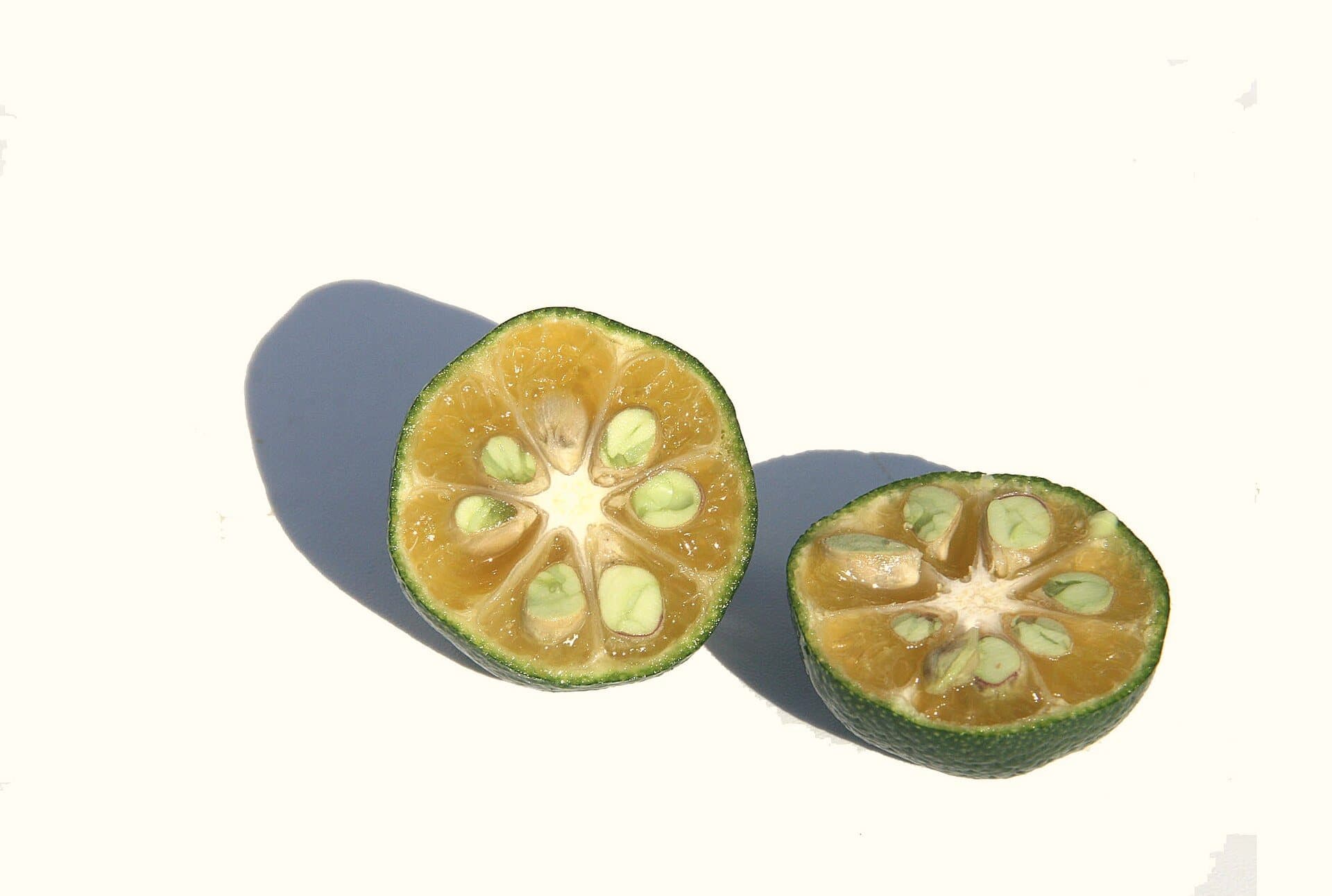
Photo: Jpbrigand2 · CC BY-SA 4.0
Origin & Heritage
Shikuwasa grows wild and in cultivation across the Ryukyu Islands and is also found in Taiwan. In Okinawa it is most closely associated with the forested northern part of the main island, known as Yanbaru.
The fruit is used at two stages. Green fruit, picked from late summer, is squeezed for its tart juice. Fruit left to ripen into winter turns orange and is eaten fresh like a small mandarin.
In Okinawa, shikuwasa juice is a household staple — splashed over sashimi, stirred into water and tea, and mixed with awamori, the islands' traditional spirit.
Culinary Uses
Halve and squeeze over fish, salads and noodle dishes as you would a lime. The fruit is small, so you'll need several.
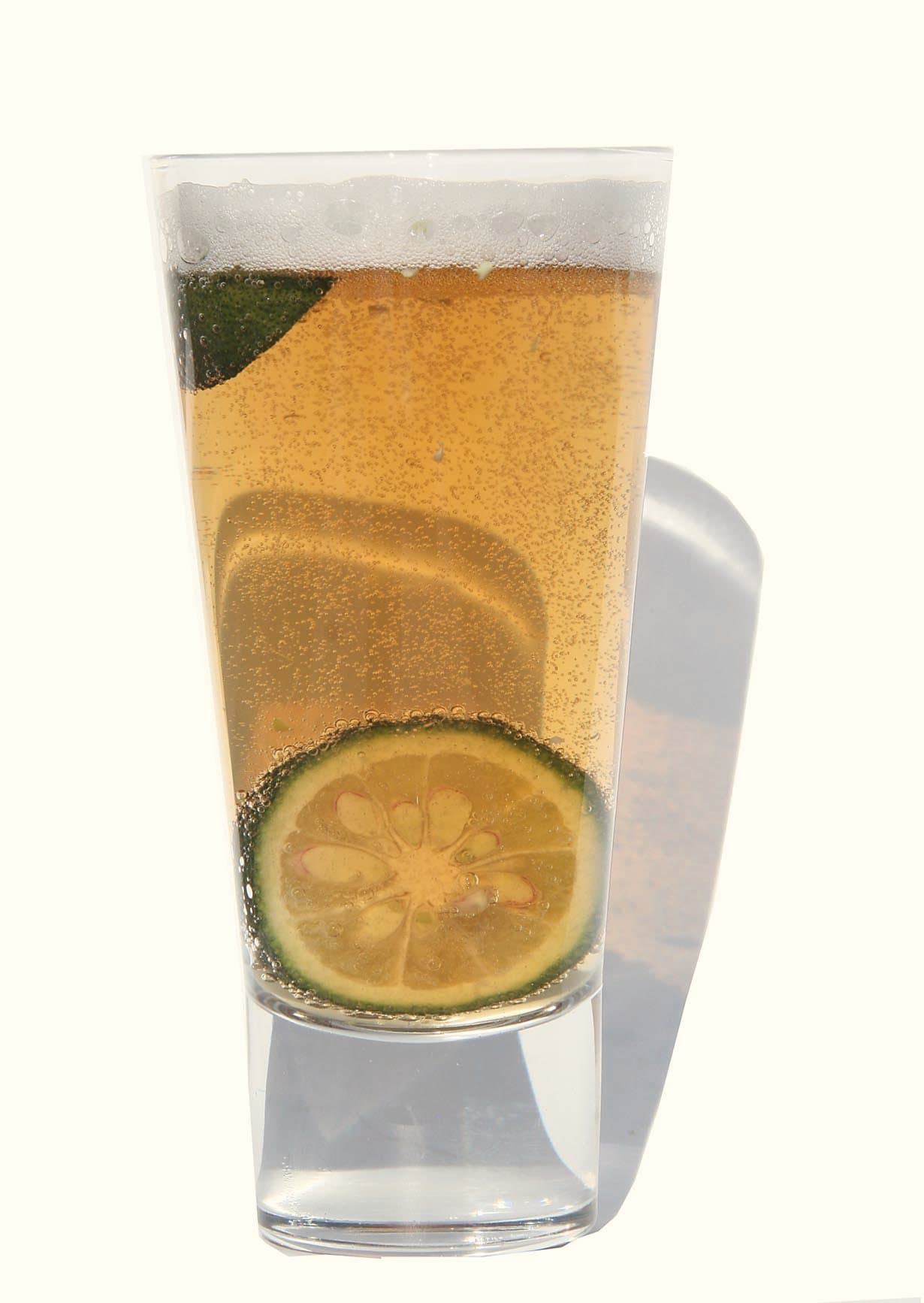
Shikuwasa juice diluted with chilled water or tea, lightly sweetened, is a classic Okinawan refresher.
A squeeze of shikuwasa is the traditional partner for Okinawa's rice spirit, served on the rocks or with soda.
Best Pairings
Japanese citrus is mostly grown by small family farms, often on steep and difficult ground. An introduction to the work that brings these fruits from tree to table.
Sudachi, kabosu, yuzu and shikuwasa offer bartenders a broader vocabulary of acidity than lemon and lime alone. A practical primer for drinks with and without alcohol.
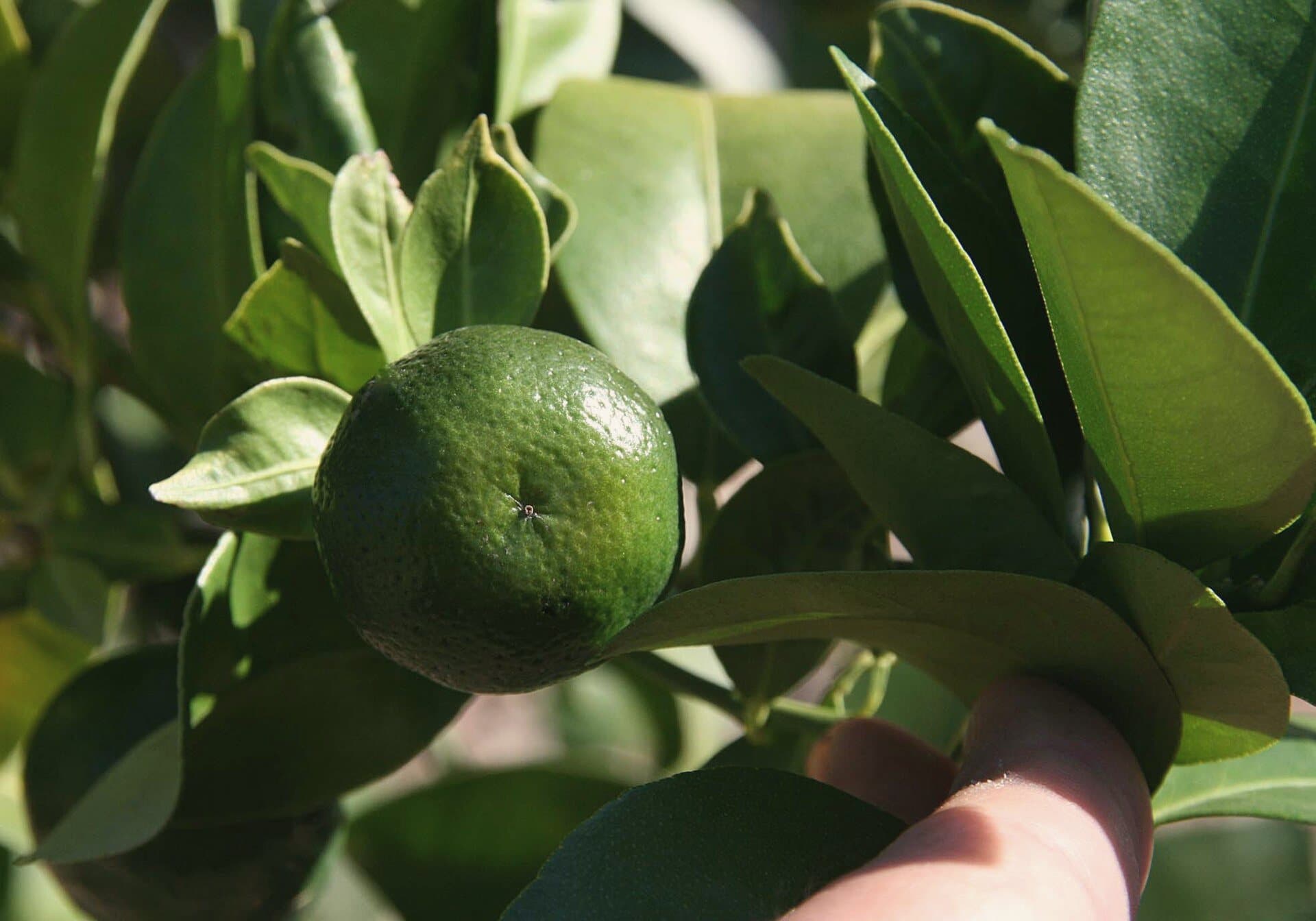
Small, flat and intensely tangy, shikuwasa is a fruit of the subtropical Ryukyu Islands. Meet the citrus that Okinawa uses green, ripe and everywhere in between.
Tangy shikuwasa, cold jasmine tea and a touch of brown sugar — an alcohol-free refresher inspired by Okinawa.
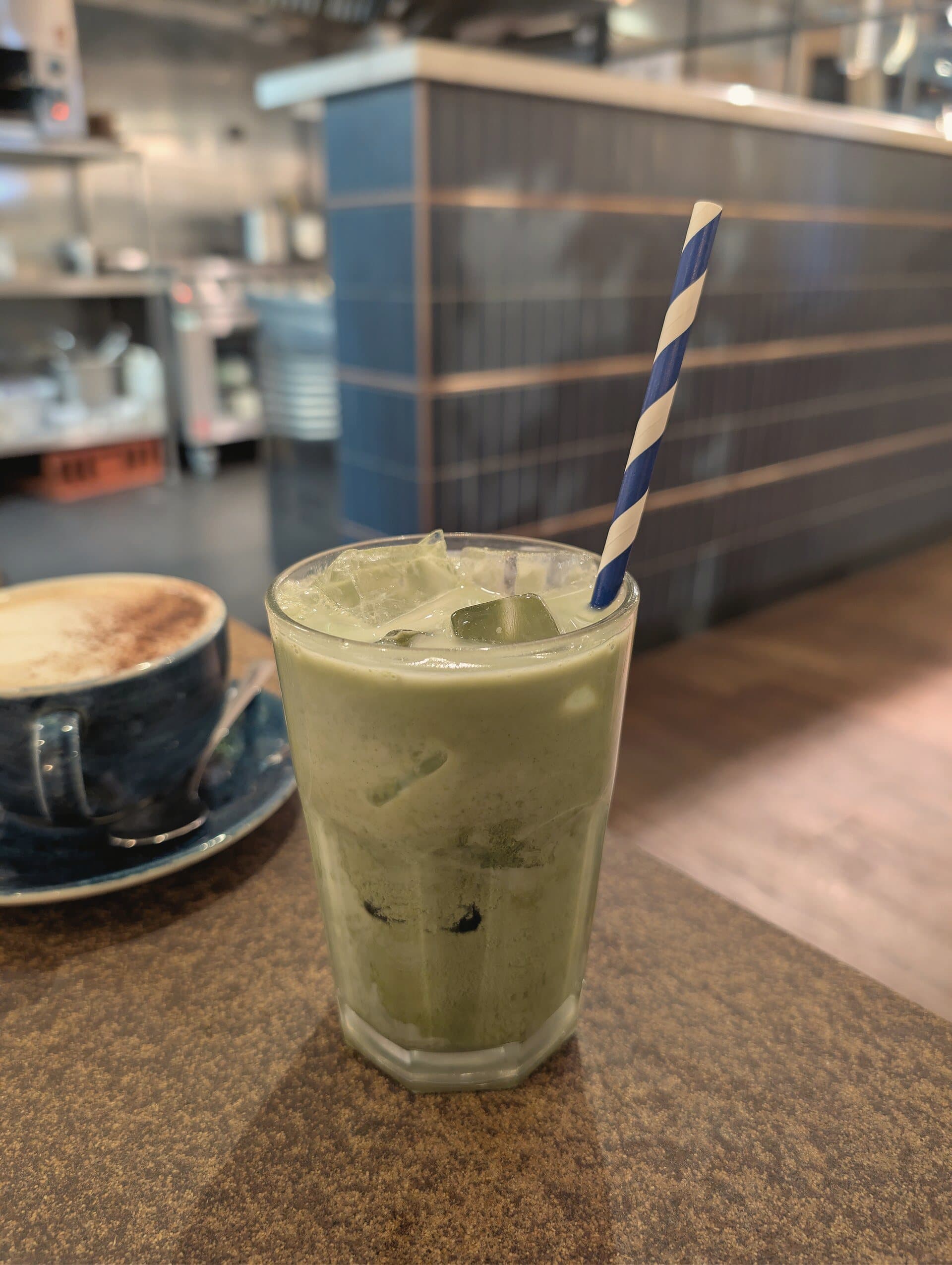
Fragrant yuzu, crisp tonic and plenty of ice — a bright, bittersweet long drink that works with or without gin.
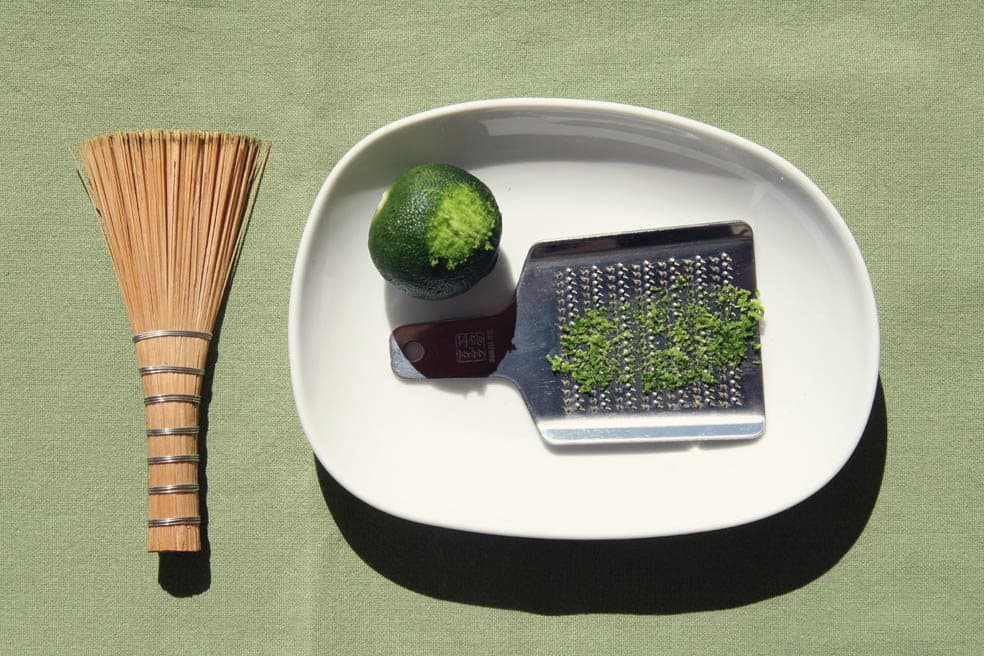
A sharp, savory dressing for crisp greens, chilled tofu or grilled fish, built on sudachi juice, soy sauce and toasted sesame.
The Newsletter
Discover Japanese citrus, seasonal recipes, and stories from the people behind the fruits.