Ingredients
Sudachi vs. Kabosu: Two Japanese Citrus Fruits Worth Discovering
Both are green, both are squeezed over food, and both are often mistaken for limes. A guide to telling these two seasonal citrus apart — and using each well.
Mellow. Juicy. Balanced.
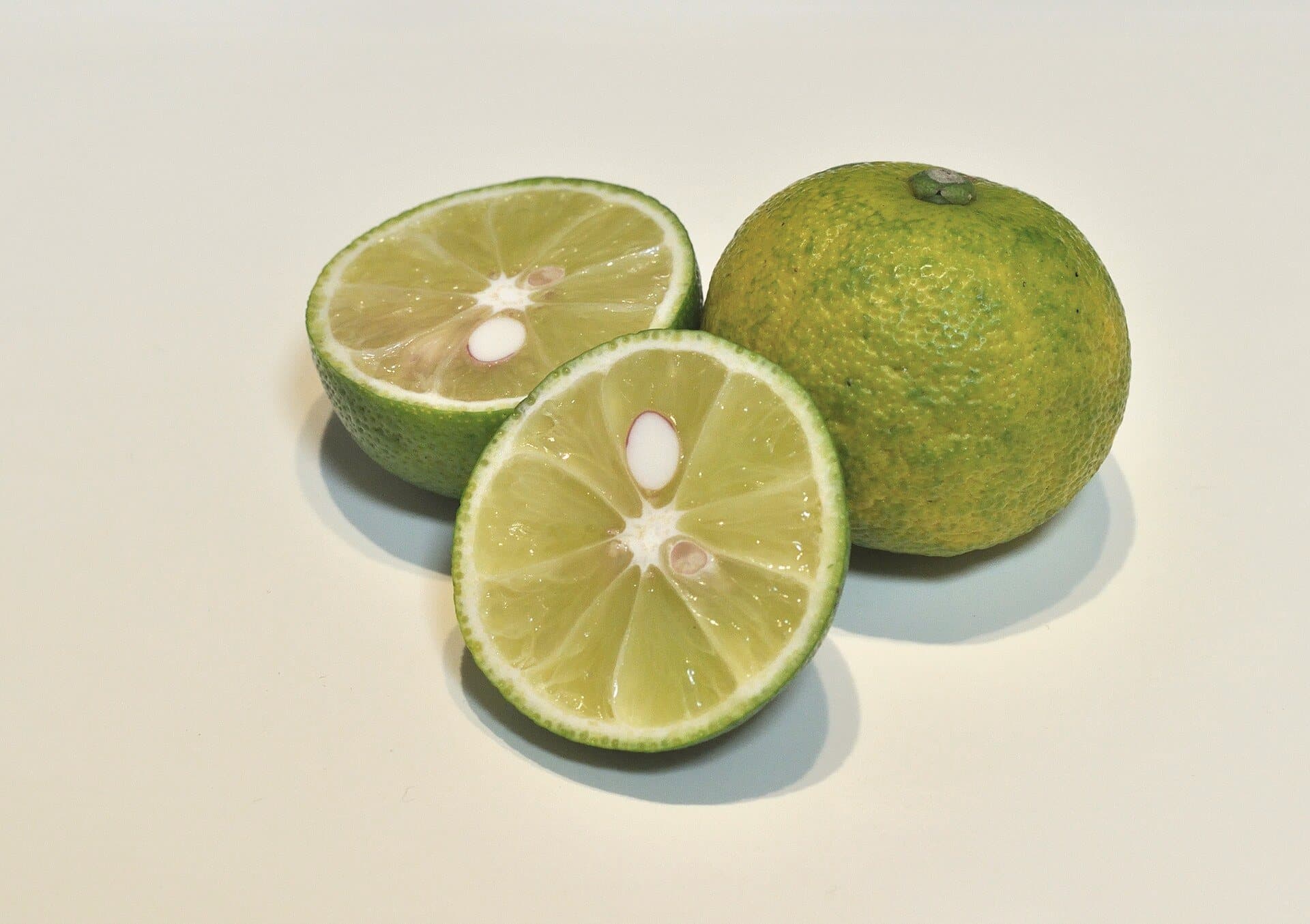
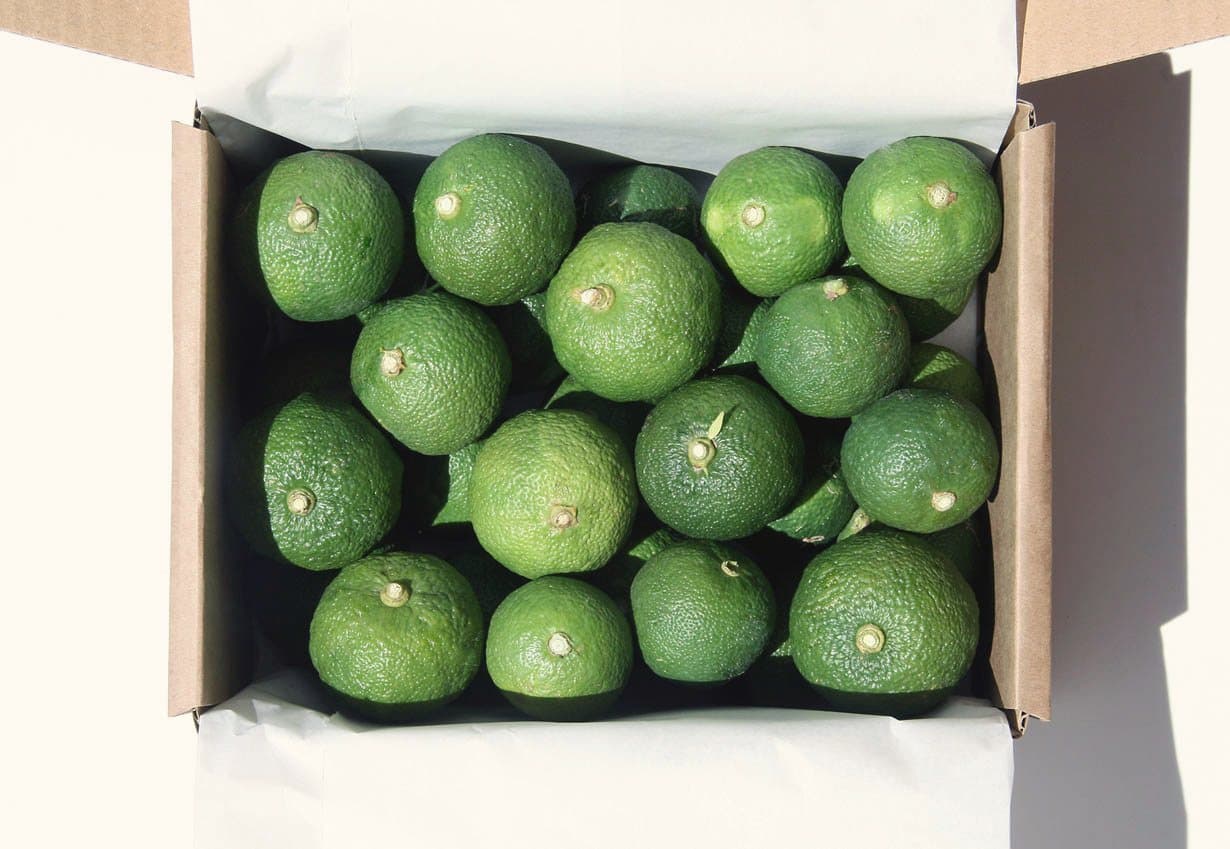
Kabosu is the generous one: larger than sudachi, softer in its acidity and full of juice. In Ōita it is squeezed over everything from sashimi to hot pot.
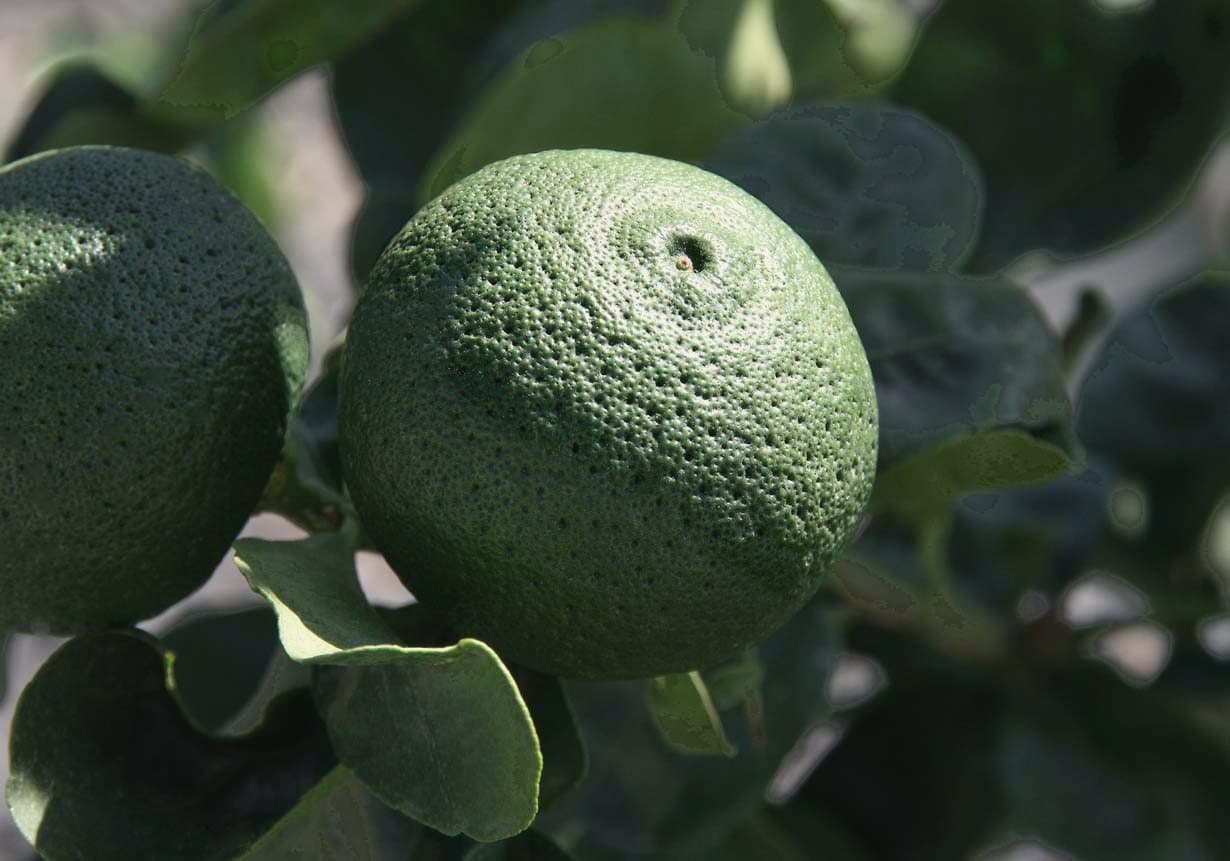
Photo: Jpbrigand · CC BY-SA 4.0
Flavor Profile
Rounder and milder than sudachi, with plenty of juice. The acidity is soft and refreshing, and the aroma is clean and lightly floral.
Editorial tasting profile on a five-step scale — a qualitative guide, not laboratory data. Flavor varies with ripeness, harvest time and growing conditions.
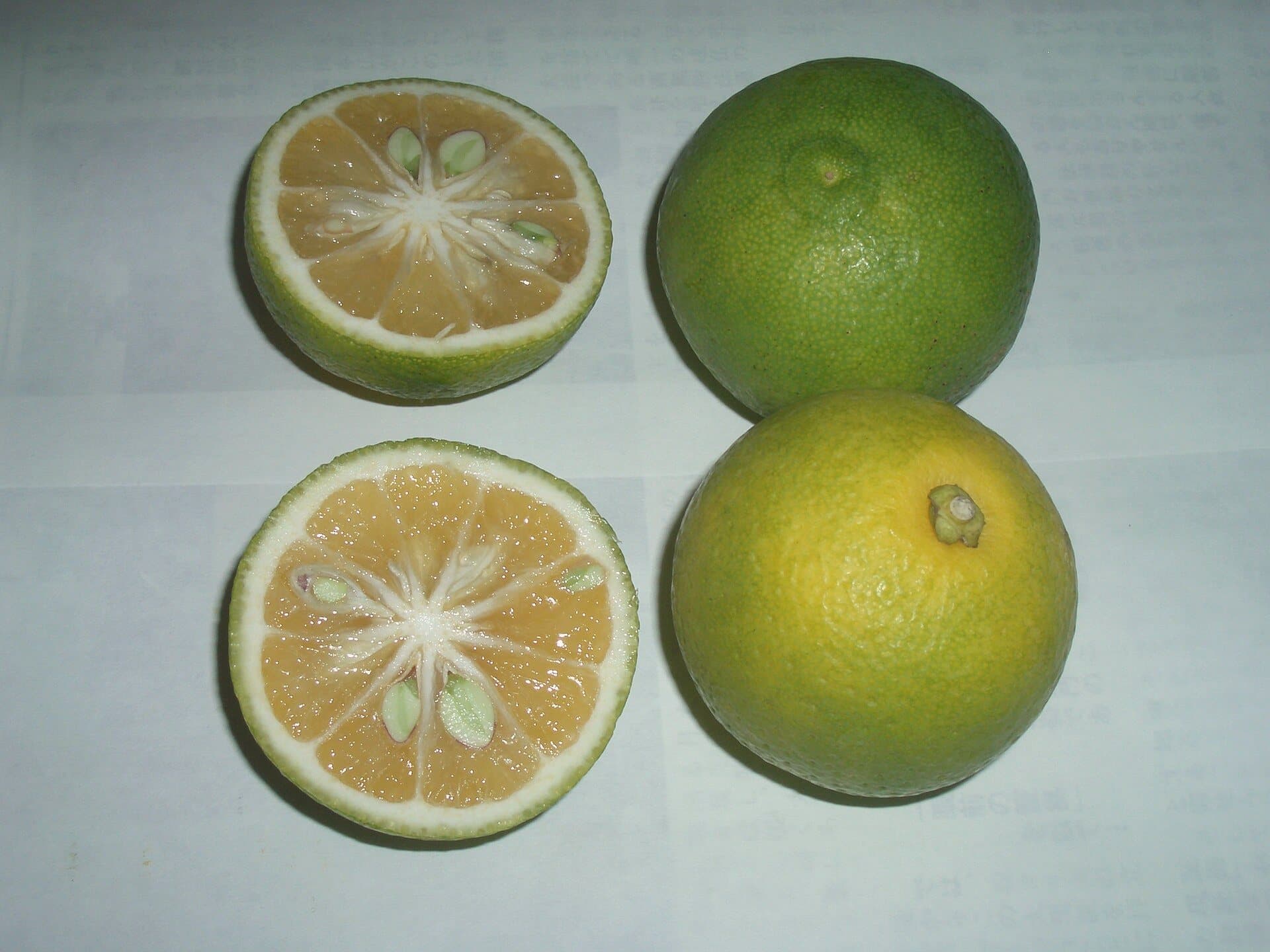
Photo: Dan (Wikimedia Commons) · Public domain
Origin & Heritage
Kabosu is the signature citrus of Ōita Prefecture in northeastern Kyushu, which produces most of Japan's kabosu. Old trees can still be found around the region, and the fruit is closely tied to local food culture.
Like sudachi, it is usually harvested while green, when its acidity is most refreshing. Left to ripen, the skin turns yellow and the flavor becomes softer.
Because the fruit is larger and juicier than sudachi, kabosu is often used in more generous quantities — in dressings, drinks and as a seasoning for whole dishes.
Culinary Uses
Squeeze over sashimi, grilled fish or a steaming nabe hot pot. The mild acidity brightens without overwhelming.
Its gentle acidity makes kabosu juice an easy substitute for lemon in vinaigrettes and marinades.
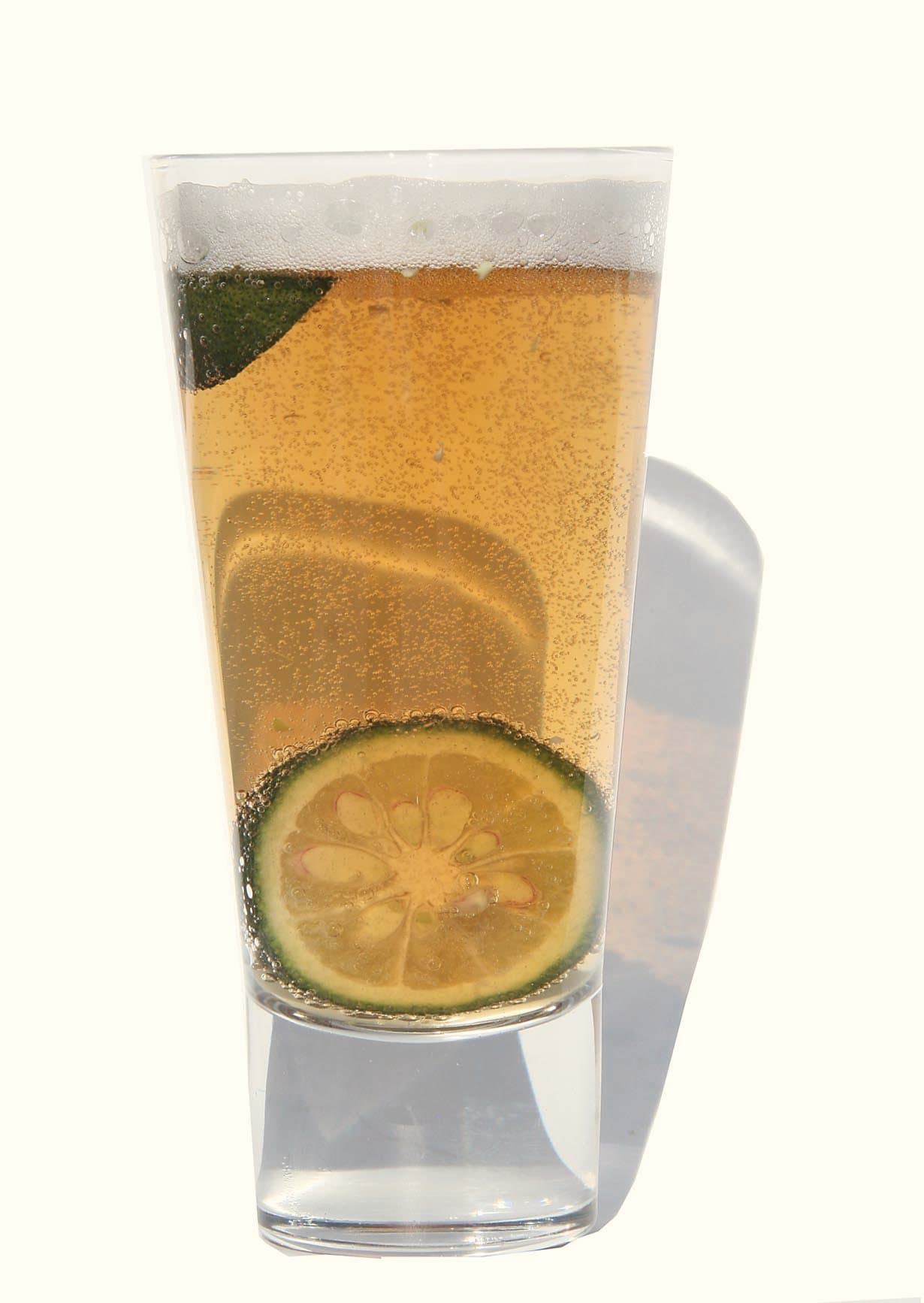
Kabosu with honey and soda water, or in a shochu highball, is a refreshing late-summer drink.
Best Pairings
Both are green, both are squeezed over food, and both are often mistaken for limes. A guide to telling these two seasonal citrus apart — and using each well.
Japanese citrus is mostly grown by small family farms, often on steep and difficult ground. An introduction to the work that brings these fruits from tree to table.
Sudachi, kabosu, yuzu and shikuwasa offer bartenders a broader vocabulary of acidity than lemon and lime alone. A practical primer for drinks with and without alcohol.
Kabosu's juicy, mellow acidity balanced with honey and topped with soda — an easy, refreshing drink in the style of Ōita's late summer.
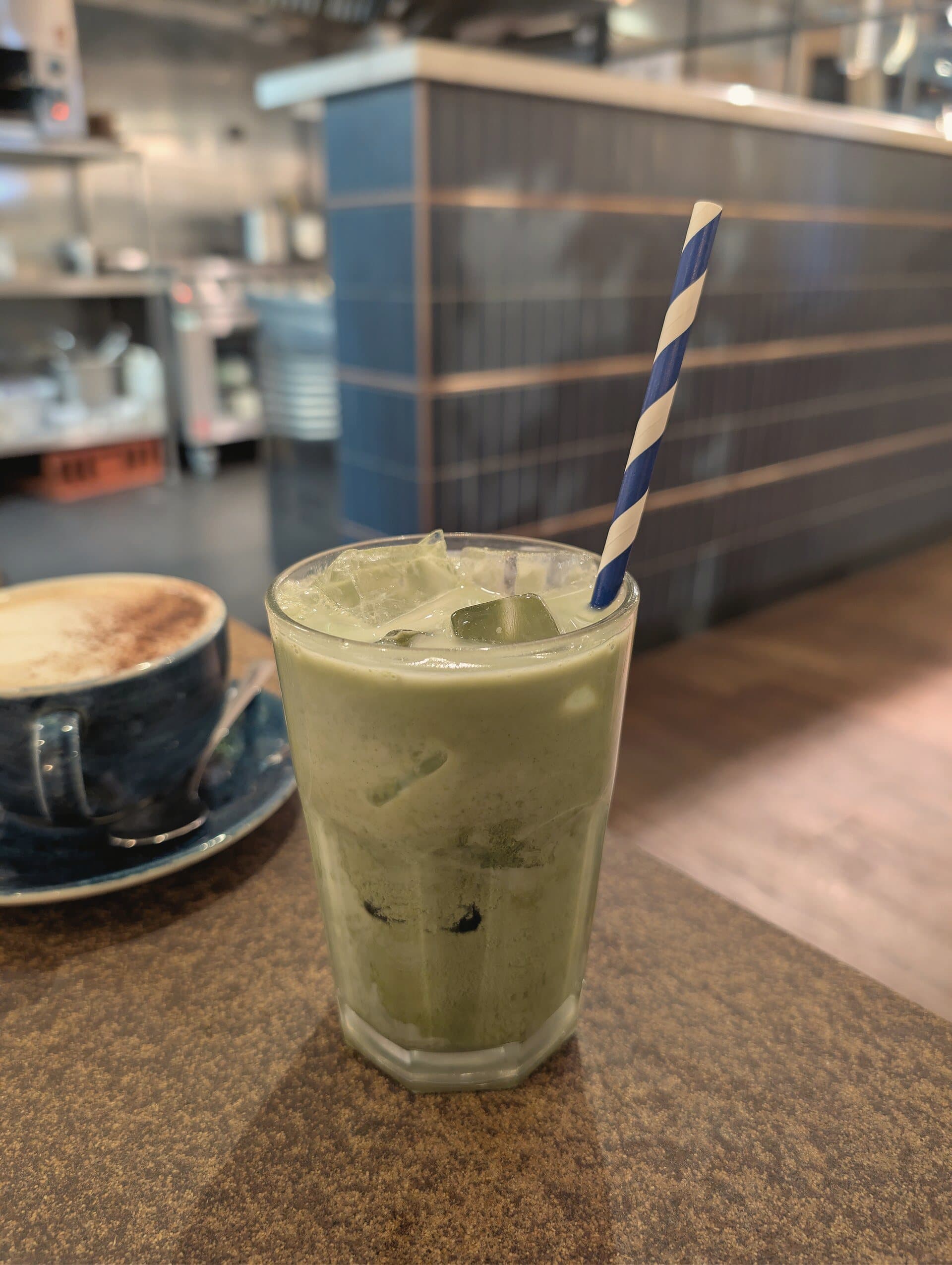
Three Japanese citrus fruits, layered with green tea and ginger — an alcohol-free drink with real depth.
Fragrant yuzu, crisp tonic and plenty of ice — a bright, bittersweet long drink that works with or without gin.
The Newsletter
Discover Japanese citrus, seasonal recipes, and stories from the people behind the fruits.