The Hands Behind the Harvest
Japanese citrus is mostly grown by small family farms, often on steep and difficult ground. An introduction to the work that brings these fruits from tree to table.
By JAPAN CITRUS Editorial ·
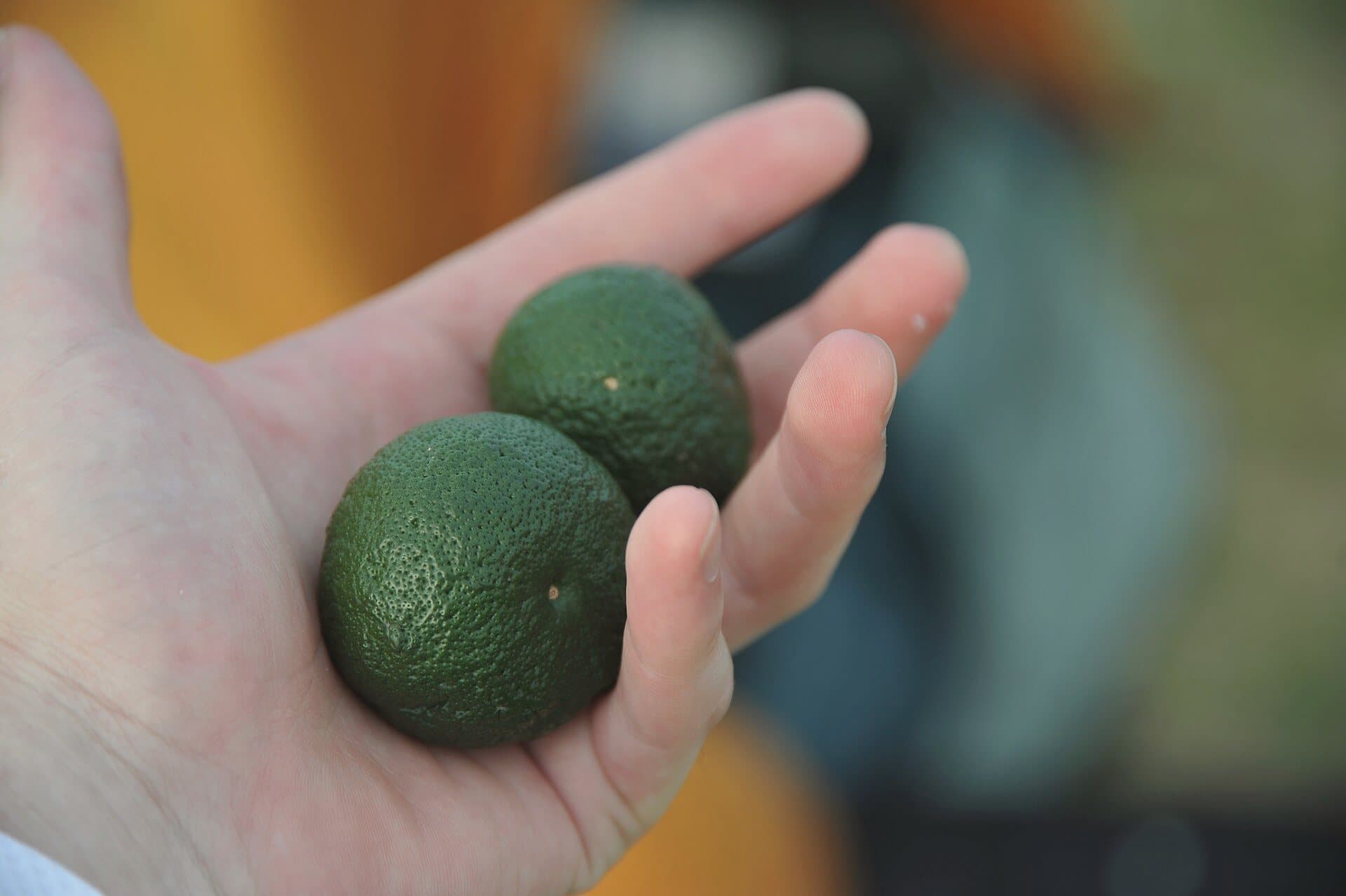
An open hand holding two small, deep-green sudachi. Photo: Takeshi Kuboki from Amagasaki, Japan · CC BY 2.0
Behind every bottle of yuzu juice or crate of sudachi are people — usually not large corporations, but families and small cooperatives working land that has been farmed for generations.
This is not a profile of any single grower. It is an introduction to the kind of work that makes Japanese citrus possible, and to the questions we hope to explore more deeply in future stories, with the growers themselves.
Small farms, steep ground
Many of Japan's citrus-growing regions are mountainous. Orchards are often terraced into hillsides, which makes mechanization difficult. Pruning, thinning, harvesting and carrying fruit are frequently done by hand.
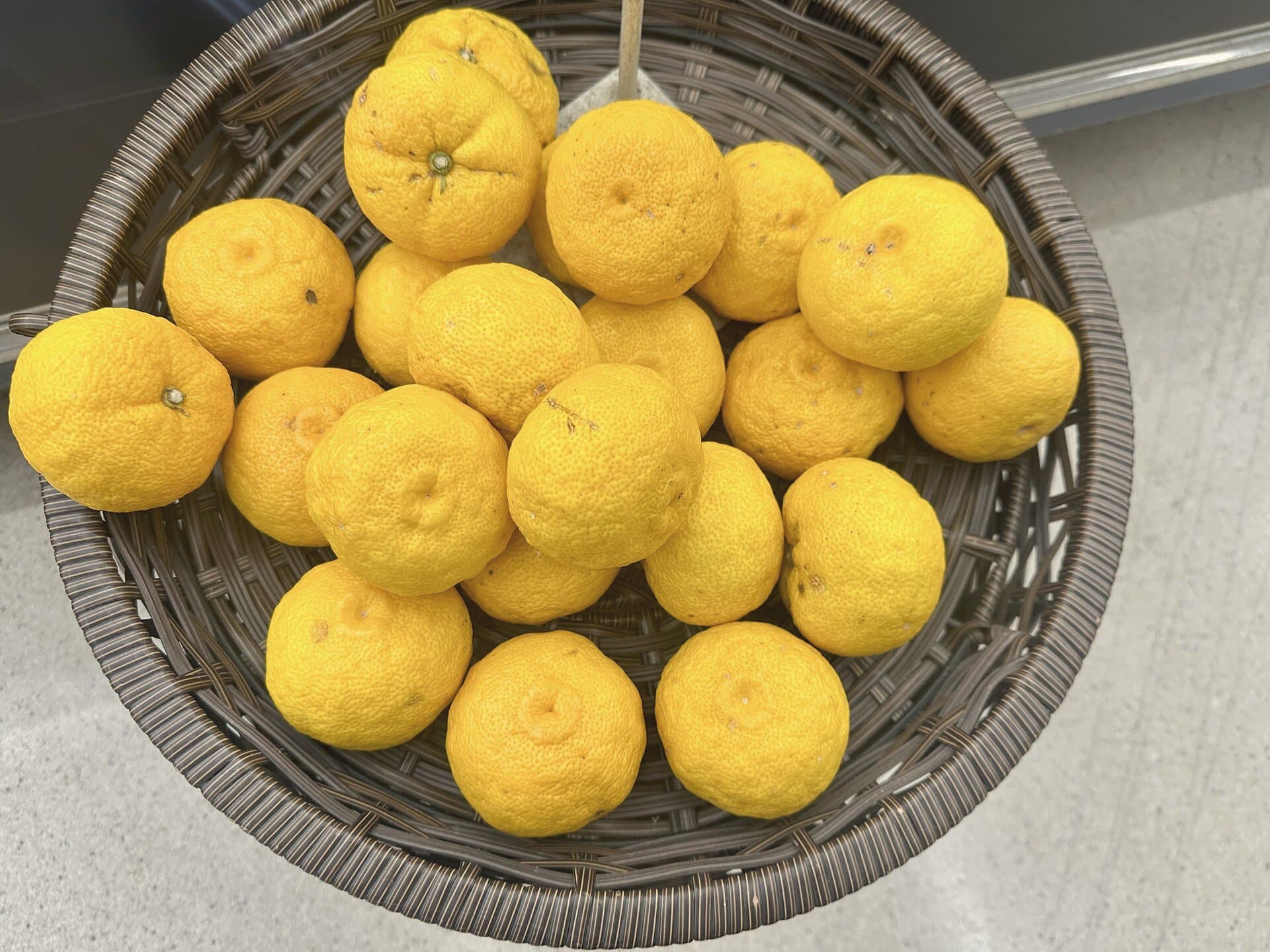
For fruits like yuzu, there is an added challenge: thorns. Yuzu branches are armed with sharp spines, and picking requires gloves, patience and care to avoid damaging the fruit.
Timing is everything
Japanese green citrus — sudachi, kabosu and green yuzu — are harvested before they are fully ripe, when acidity and aroma are at their peak. That means growers must watch their trees closely through late summer and pick at the right moment.
Shikuwasa growers in Okinawa face a different rhythm: green fruit for juice from late summer, and ripe orange fruit for eating fresh in winter.
Challenges ahead
Like much of rural Japan, many citrus-growing communities face an aging farming population and fewer young people taking over orchards. Some regions have responded by creating processed products, building local brands and welcoming new growers. These efforts vary widely from place to place.
What we want to learn
We are at the beginning of this project. In future issues we hope to visit growing regions, speak with farmers and cooperatives directly, and share their perspectives in their own words.
If you grow, process or work with Japanese citrus and would like to be part of that conversation, we would love to hear from you through our contact page.
Written by the JAPAN CITRUS editorial team as general background. Seasonal timings and regional details are approximate and can vary by year and grower.